
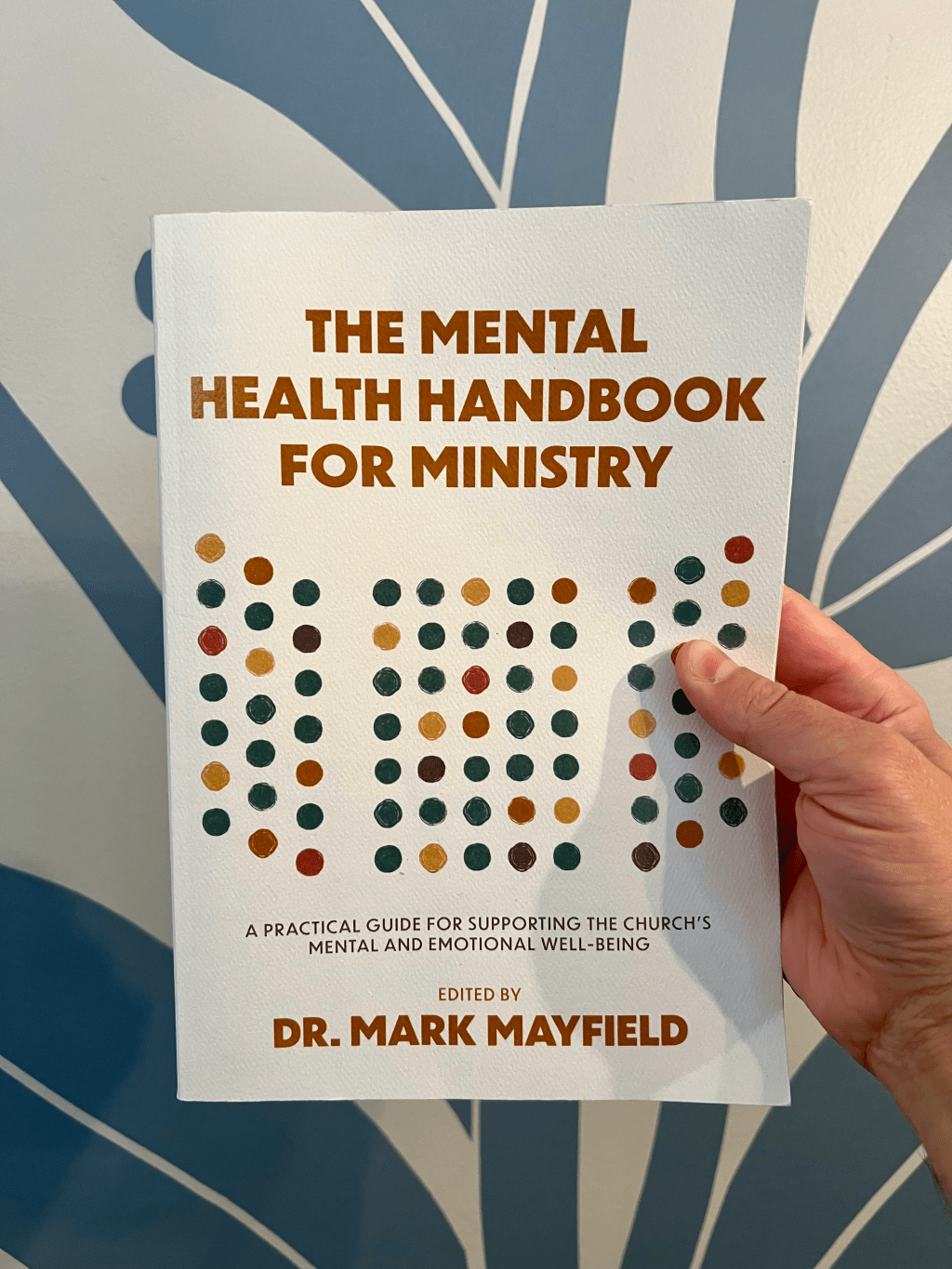
Pastors are often the first call when life begins to unravel. There is, without a doubt, a growing need for mental and emotional health resources in our day. When people seek out help, pastors are often someone’s first choice. They are trusted, wise, and compassionate, yet most pastors and ministry leaders are not formally trained in counseling.
Dr. Mayfield recognized this gap and created a resource to help. The Mental Health Handbook for Ministry serves as a starting point. It’s a practical guide for pastors navigating real conversations about mental health.
This collection brings together experts in the field, offering clinically informed and research-based insights presented through a biblical worldview. The goal is to equip pastors to identify symptoms, offer care and support, suggest helpful strategies, and discern when it is time to refer someone to a licensed professional.
Contents of the Book
A brief introduction sets the foundation by providing basic terms and definitions, important considerations, and the overall purpose of the book. The reader is then met with a comprehensive set of chapters addressing different topics in mental health.
Mayfield recommends not reading this book cover to cover. Bookmarking sections allows for quick reference when specific situations arise. That being said, I would recommend reading Part 1: Getting Started to get familiar with the book and its structure.
Part 2 contains the “handbook” material, including chapters on:
- Depression
- Grief
- Anxiety
- Spiritual Bypassing
- Trauma
- Suicide
- Non-Suicidal Self-Injury
- Bipolar Disorder
- Personality Disorders
- Addiction
Part 3 continues the handbook format but focuses specifically on children and families, including:
- Supporting Children and Adolescents
- Working with Foster and Adoption Families
- Marriages and Families
- Working with High-Performing Families
The appendix also provides brief overviews of topics such as eating disorders, medication, and neurodivergence.
Chapter Structures
Each chapter follows a consistent structure, making the book especially useful as a quick-reference guide. Authors define key terms, explore possible root causes, and describe how each issue impacts daily life. This helps pastors better identify and understand what someone may be experiencing.
From there, each chapter offers practical guidance for care. These “how to help” sections are among the most valuable parts of the book, providing action steps for walking alongside someone in need. Some chapters also address specific situations. For example, the grief chapter includes guidance for navigating tough emotions during the holidays.
Every chapter concludes with an “Additional Resources” section, pointing readers to recommended books, websites, and other tools for further help. There are so many recommended resources for each chapter!
Honest Opinion
I’m genuinely thankful for this resource.
My only complaint would be that this book is so thorough and thought-out that it requires intentional time to fully absorb it all. Every chapter is so well written, with extra footnotes and so many other resources to further your studies, that you can’t plan to skim.
Many pastors receive theological training in Bible college or seminary, often with only limited exposure to counseling (if any). In my own experience, with a bachelor’s degree in music education and a master’s in theological studies, I’ve had no formal training in this area.
And yet, people still come.
When they do, I want to listen well, respond with compassion, and offer meaningful support. This book will help bridge that gap for me. It gives me better tools to identify what someone may be facing, suggest helpful next steps, and recognize when professional care is needed.
Who is this for?
I would especially recommend this resource for pastors (I really believe every pastor could benefit from adding it to their library), small group leaders, and anyone regularly walking with others through difficult seasons.
Thank you to Baker Publishing Group for providing a copy of this book for an honest review. I’m grateful to have it in my library and readily available for quick reference.

by Craig Archer
Craig is a worship pastor at Wallula Christian Church and the creator of Active Theology. He loves coffee dates with his wife, reading, and riding his bike. A few of his favorite things are third wave coffee, vanilla ice cream, and plain t-shirts.
 Active Theology
Leave a comment