
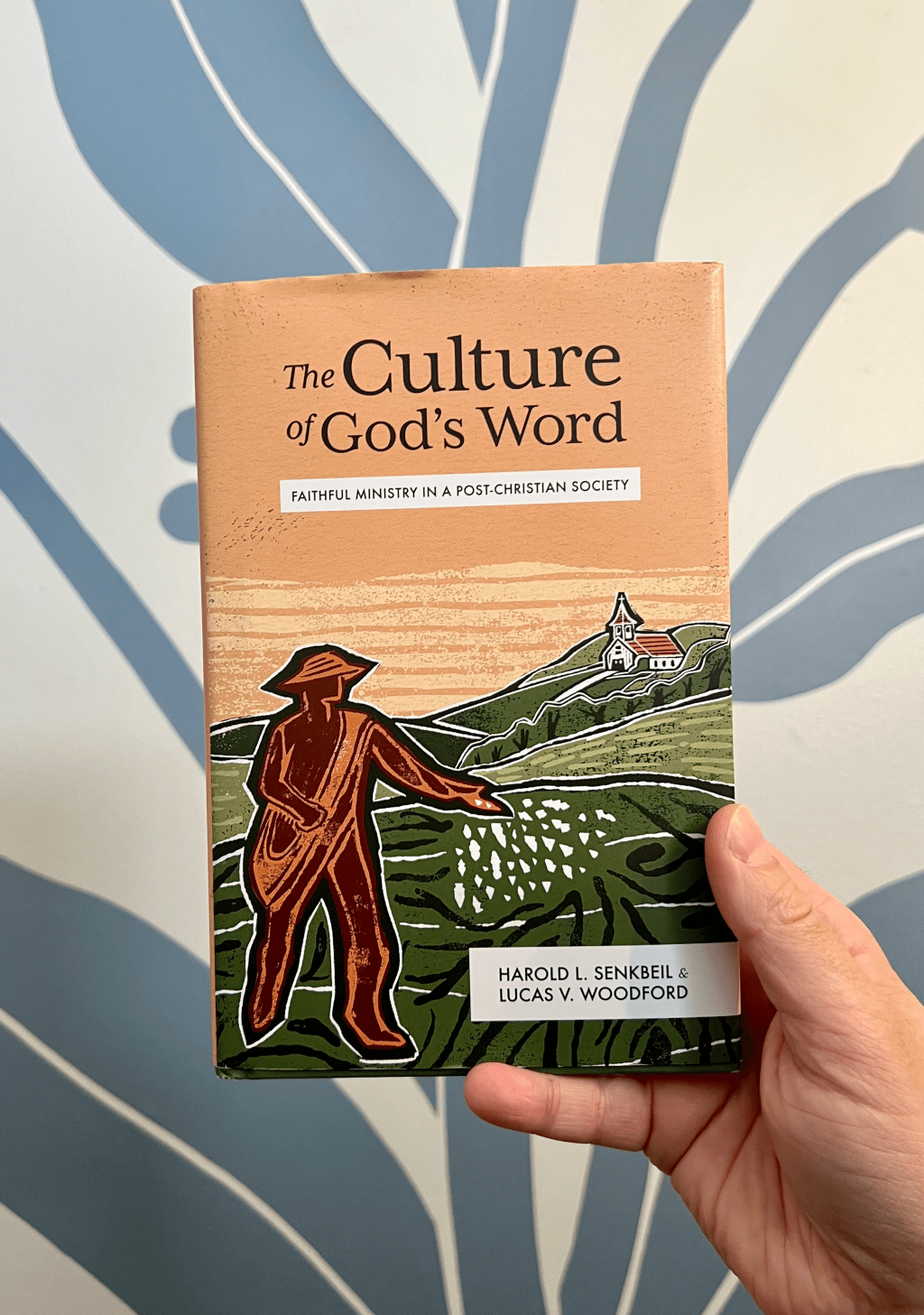
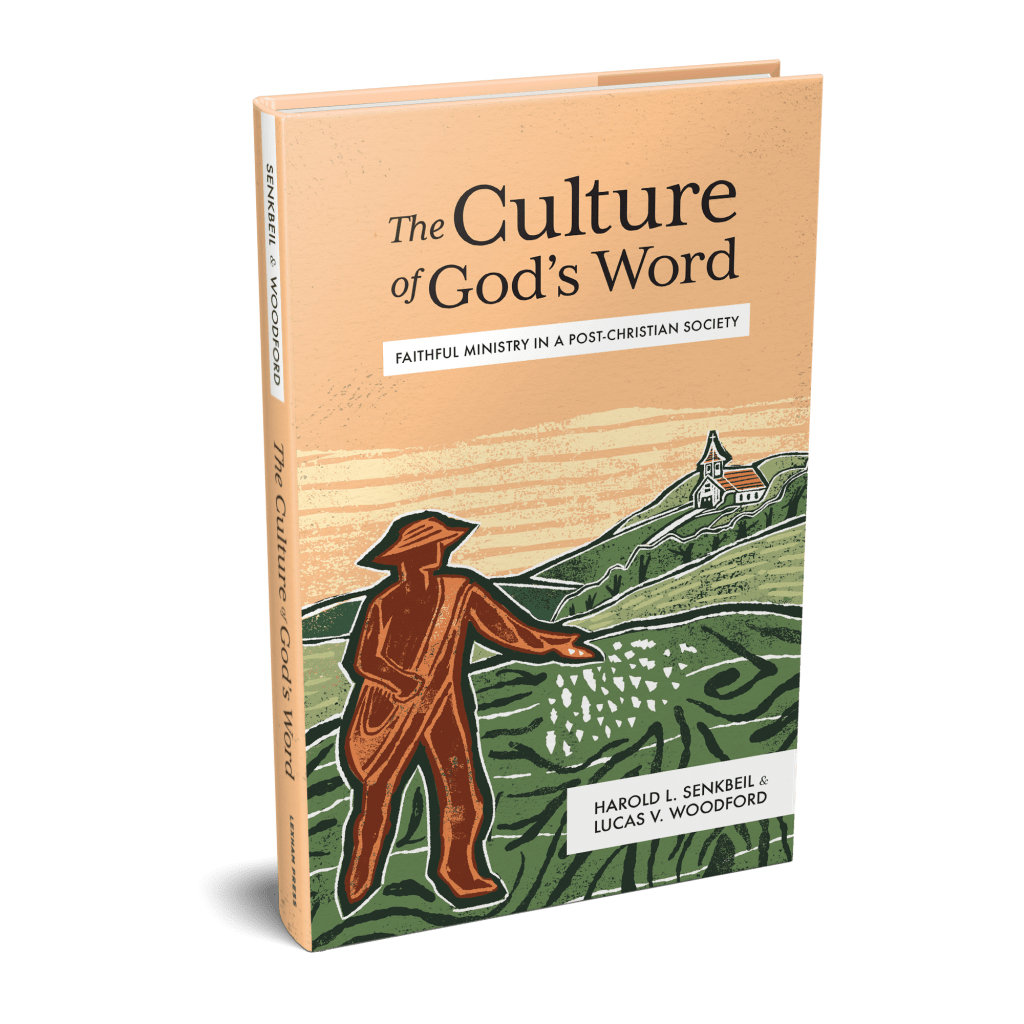
This is a pastoral re-centering of the church on the Word. We live in a post-Christian society, so church leaders must navigate that landscape. This book aims to answer questions, guide church leaders, and give God’s Word the room to work powerfully in the world around us.
The Culture of God’s Word is geared toward those in ministry, though anyone deeply involved in their local church will find this book worth reading.
I was unfamiliar with the authors before reading, and learned that both come from a Lutheran background – a tradition outside my own ecclesial background. I was curious to see if I would come across anything that felt “Lutheran” to me, but that never really happened.
This led me to wonder: How does their Lutheran theology shape their emphasis on the Word? How do their traditions and history shape who they are today and impact the moment we are in? These questions came to mind since I don’t have direct experience with the Lutheran tradition.
Though the book rarely shows its Lutheran roots, the emphasis on the Word as active, living, and culture-shaping reflects a deeply confessional flavor. The contents of the book center on God’s ability to work through His Word. Even though I come from a different ecclesial tradition, I found that emphasis refreshing and familiar.
What is interesting is that I’m on staff at a Restoration Movement Church, which holds closely to the teachings of Acts and the New Testament Church. We strive to model the book of Acts as closely as we can. This book aims to utilize that same model.
“The book of Acts is a practical guide to mission in every generation. It shows how the first Christians were driven not by their cultural context but by the word of Christ to change hearts and lives of people living very much in the world, yet not of it. They weren’t seeking to convert cultures but people who lived in various cultures.”
That thesis frames the entire argument.
Structure
The book begins with a prayer, setting the tone of the book and helping the reader to invite the Holy Spirit in as they begin their journey through the book. (This might be the most Lutheran-esque part of the book, since it has the choice of call and response within the prayer).
Each chapter of the book begins with a passage from Acts that guides the teaching. The chapters unfold the author’s vision with titles such as…
- The Church Is Created by the Word of God
- The Church Lives in One Transcendent Culture
- The Church Proclaims Christ Jesus
- The Church’s Worship Transcends Cultural Context
- The Church Lives in the World, Not of the World
- The Church Grows from the Culture of the Word
As the authors grow their content and argument chapter by chapter, the last chapter of the book ends with many practical and thoughtful application points.
Strengths
The whole premise of the book centers around the church’s mission of not changing the culture around them, but letting God’s Word build the culture it speaks of. Their argument begins and centers around an early statement in chapter 1, when they say, “The power for the growth of the kingdom is in the word itself.” I found myself dwelling on this statement for about a week.
It’s an incredible truth: the Word actively creates a culture of its own, and it’s the one we read about in Acts.
The framework church leaders need is already embedded in Scripture. As it is read, studied, and lived out, the Word changes lives and therefore the way people live and work.
So, for church leaders, how does this thought contrast with pragmatic, metrics-driven ministry?
How does this confront anxiety in ministry leadership?
How does this speak to churches tempted by political alignment?
This book helps to take the pressure off, allow pastors to loosen their white-knuckle grip, and lean on the power of God’s Word to grow, build, and shape the world around them.
The authors don’t shy away from the fact that societies and cultures “wield extraordinary influence in how people live and work.” Churches must take their surrounding context into consideration in order to be effective, but the Word of God takes priority over context. Senkbeil and Woodford are adamant that the mission of the church isn’t a culture war, but instead, “The people before us are not potential recruits in a culture war we’re fighting but lost souls seeking a hope which spans all generations, cultures, and time.” If we want to mimic the first-century church, we must put emphasis on the growth of God’s Word and not the growth of numbers.
Points of Critique
At times, the argument feels more theological than practical until the final section. While reading this book, I began to wonder how churches could put these theological ideas into practice, all the while agreeing with what they were saying. With the practical steps being at the end, I would have enjoyed them sprinkled in throughout the book.
The book presents really strong arguments that are all based on Scripture. One thing I would have loved to see would be more background and personal stories from the authors. I don’t know much about them, outside of the short bio included in the sleeve of the book. With this being a book directed towards pastors, some personal stories, successes, or failures would have added some life and connection points to the audience.
Conclusion
This book felt easy to read, coming in at 150 pages. Many subheadings and a conversational writing style made it easy to digest and read through. It’s intended for pastors; I could see elders, ministry leaders, and committed members gleaning rich insight from its content.
I felt a weight lifted off my shoulders as I read it, and also a slight conviction. First, it’s an opportunity to take the pressure off and let God’s Word show its transformative power through your ministry. In a ministry climate obsessed with relevance, strategy, and survival, this book reminds us that the church’s life has always come from the living and active Word of God. And that’s where the conviction comes in. It’s a healthy reminder to pastors: there is an immense weight in being faithful to preach God’s Word well.
Thank you to Baker Publishing Group for sending me a copy of this book in return for an honest review!

by Craig Archer
Craig is a worship pastor at Wallula Christian Church and the creator of Active Theology. He loves coffee dates with his wife, reading, and riding his bike. A few of his favorite things are third wave coffee, vanilla ice cream, and plain t-shirts.
 Active Theology
Leave a comment